
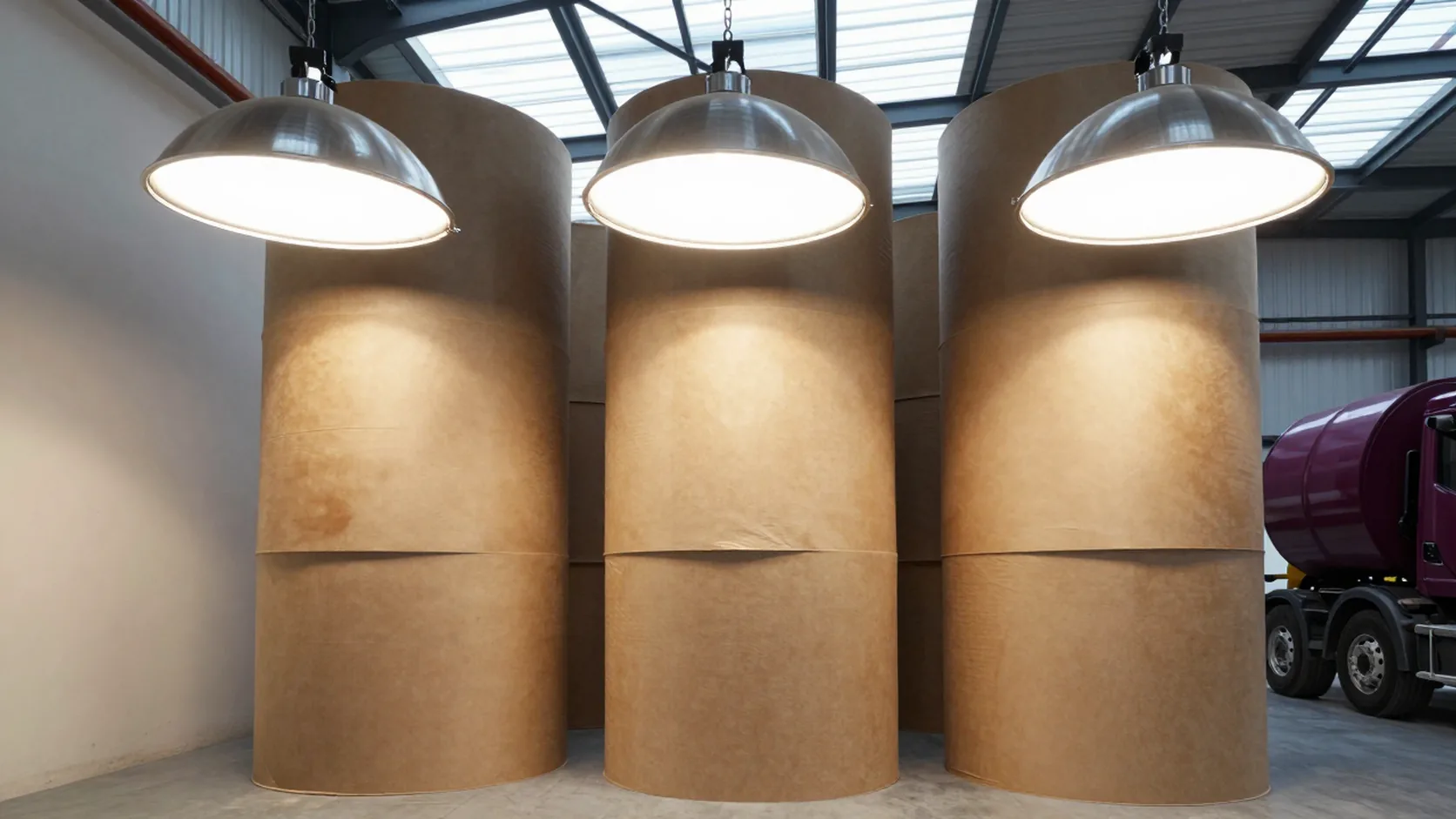
LED Warehouse High Bay Lighting Costs
High Bay LED Lighting for Warehouses and Industrial Buildings
Get a Free Quote From Us Today!
We aim to get back to you in 24 hours.
Installing LED warehouse high bay lighting is an investment in better visibility, energy efficiency and day-to-day warehouse operations. The overall cost depends on the size of your building, ceiling height, number of fittings and the lighting performance required.
High bay LED lights are particularly suitable for warehouses and industrial buildings with ceilings above six metres. They provide high-output illumination across storage aisles, racking systems, work areas and circulation routes.
A complete LED high bay lighting installation can cost approximately £5–£10 per m², including fittings and straightforward installation. For a 1,000 m² warehouse, this represents an estimated investment of £5,000–£10,000.
The final price will depend on the lighting specification, installation conditions and whether additional features such as motion sensors, dimming systems or new electrical connections are required.
LED Warehouse Lighting High Bay provides tailored lighting solutions across the UK, using photometric planning to determine suitable light distribution and improve illumination throughout your premises.
Get a Free No Obligation Quotation Today
Average LED Warehouse High Bay Lighting Costs
The cost of an LED high bay lighting project is influenced by the amount of floor space that needs to be illuminated and the number of fittings required.
The following table provides an estimated guide to warehouse lighting installation budgets.
| Warehouse size | Estimated installed cost |
|---|---|
| 250 m² | £1,250–£2,500 |
| 500 m² | £2,500–£5,000 |
| 750 m² | £3,750–£7,500 |
| 1,000 m² | £5,000–£10,000 |
| 2,000 m² | £10,000–£20,000 |
| 5,000 m² | £25,000–£50,000 |
Specialist fittings, complex electrical work, access equipment, VAT and additional lighting controls may increase the final cost.
For example, a 500 m² warehouse could require a budget of £2,500–£5,000, depending on its ceiling height and lighting requirements. A larger distribution facility covering 2,000 m² could need an investment of £10,000–£20,000.
These figures are intended for initial budgeting. A lighting assessment is needed to establish the correct fitting quantity, wattage, lumen output and positioning for your particular building.
What Influences LED Warehouse High Bay Lighting Costs?
Several technical and practical considerations determine the final installation price. Understanding these factors can help you plan your project more accurately.
Warehouse Dimensions and Ceiling Height
The dimensions of your warehouse affect the number of LED high bay fittings needed to achieve consistent illumination.
Ceiling height is equally important. Buildings with ceilings above six metres generally require high-output fittings with suitable beam angles to distribute light effectively at floor level.
Higher mounting positions may also require specialist access equipment, increasing installation time and labour costs.
LED Fitting Wattage and Lumen Output
The specification of each LED high bay fitting has a direct impact on the equipment budget.
Higher-wattage models generally provide greater light output, although the most suitable option depends on the building layout and required lux levels.
When comparing products, consider:
- Wattage: The electrical power consumed by each fitting.
- Lumens: The total amount of light produced.
- Luminous efficacy: How efficiently the fitting converts electricity into light.
- Colour temperature: Whether 4000K or 5000K is more appropriate for the working environment.
- Beam angle: How widely the light spreads across the warehouse.
- Product lifespan: The expected operating life and warranty offered by the manufacturer.
Selecting suitable specifications helps prevent over-lighting, unnecessary electricity consumption and uneven illumination.
Racking Layout and Light Distribution
Warehouses with tall storage racks and narrow aisles can require more detailed lighting arrangements than open storage buildings.
Fittings must be positioned to illuminate both the floor and relevant working areas without creating excessive shadows between shelves.
LED high bay lights with integrated reflectors and precision-engineered optics can help direct light where it is needed. Photometric planning may also be required to establish the most effective arrangement.
Environmental Protection Requirements
The working environment can influence the type and price of LED high bay fittings.
For example, warehouses exposed to dust, moisture or demanding industrial conditions may require IP65 or IP66-rated products.
More robust fittings can cost more initially, but choosing suitable protection can help reduce premature product failure and maintenance requirements.
Sensors and Lighting Controls
LED high bay systems can incorporate additional technology to improve energy management.
Available options include:
- Motion sensors that respond to occupancy.
- Daylight harvesting to adjust brightness according to natural light.
- DALI dimming for more precise lighting control.
- Automated systems that adjust illumination in different warehouse zones.
These features increase the initial equipment budget but can help reduce unnecessary electricity consumption, particularly in warehouses with changing occupancy levels.
Installation and Electrical Requirements
The condition of your existing electrical system also affects project costs.
If existing wiring and mounting arrangements are suitable, the installation may be relatively straightforward. However, new electrical connections, circuit alterations or additional cabling can increase the overall price.
Access restrictions and the need to install lighting while the warehouse remains operational can also affect labour requirements.
Request a free quote
How to Get Better Value from LED High Bay Lighting
Getting the best value involves more than choosing fittings with the lowest purchase price. The lighting system should provide suitable illumination while keeping energy consumption and maintenance requirements under control.
Here are some practical ways to manage your budget:
- Arrange photometric planning: Use a lighting assessment to calculate the required fittings and their positions before ordering products.
- Select appropriate wattages: Match light output to ceiling height and working activities instead of automatically choosing the highest-powered option.
- Consider integrated sensors: Automated controls can reduce lighting usage in unoccupied areas.
- Compare product lifespans: Look at warranty periods, driver quality and expected operating hours.
- Plan installation in advance: Coordinating access equipment and working schedules can help reduce disruption and additional labour costs.
A carefully specified system can deliver better long-term value by balancing installation expenditure with energy efficiency and reliability.
Frequently Asked Questions
How many high bay LED lights does a warehouse need?
The number depends on the building dimensions, ceiling height, racking arrangement and required illumination levels. A photometric lighting assessment can calculate the appropriate fitting quantity and positioning.
Are LED high bay lights expensive to install?
The initial installation cost depends on the product specification, access requirements and electrical work. However, installing several fittings as part of one planned project can be more economical than arranging separate installation visits.
Can LED high bay lights reduce warehouse electricity bills?
Yes. LED high bay systems can use significantly less electricity than traditional lighting technologies. The actual savings depend on the existing fittings, operating hours, electricity tariff and use of lighting controls.
What is the expected lifespan of LED high bay lighting?
LED Warehouse Lighting High Bay states that its lighting solutions can offer a lifespan of up to 100,000 hours. Actual operating life depends on product quality, operating temperature, installation conditions and usage.
Do I need a lighting survey before requesting an installation?
A lighting assessment is recommended because it helps establish existing illumination levels, ceiling height, warehouse layout and suitable fitting specifications. This information also makes it easier to prepare an accurate project quotation.
Get Your Free LED Warehouse Lighting Quote
Looking to improve the lighting in your warehouse or replace an outdated system? LED Warehouse Lighting High Bay provides high-output LED lighting solutions designed for warehouses and industrial buildings across the UK.
Our approach includes consultation, photometric planning and professional installation. We consider your ceiling height, storage arrangements, light distribution and operational requirements to help identify an effective lighting solution.
Whether you are planning a new installation or upgrading existing warehouse fittings, our team can help you understand the options available and the costs involved.
Contact LED Warehouse Lighting High Bay today to request your free, no-obligation quotation.
We aim to respond to enquiries within 24 hours and can begin assessing project requirements within two to three business days.
Get in touch today and find out how the right LED high bay lighting system can improve your warehouse environment.
speak with our team today
What People are Saying About Us
★★★★★
“Our warehouse has high ceilings and long storage aisles, so consistent lighting was important. The proposed high bay layout helped us address darker areas and improve visibility for staff working around the racking.”
Bethany Clarke
London
★★★★★
“We needed lighting that suited our distribution centre and daily operating hours. The options for motion sensors and dimming controls gave us useful features to consider when planning an upgrade.”
Murray Campbell
London
★★★★★
“Choosing lighting for our production space meant balancing visibility, energy use and the layout of the machinery. The high bay lighting consultation helped us understand how beam angles and colour temperature could affect the working environment.”
Ciara Connolly
London
★★★★★
“We were reviewing the lighting in a large commercial building with elevated ceilings. The discussion covered fitting types, light distribution and maintenance requirements, helping us identify the main considerations before moving forward.”
Miles Ashworth
London
Our Locations
We are proud to work nationally across the UK, allowing us to ensure we can provide services to you.
For a full list of counties we cover in the UK, see below.